

Iinii Insights
Na'a (Mother Earth) is not just a place we live, but a living relative we care for with respect and gratitude every day. While Mother Earth Day reminds us to take action, our Elders encourage us to give back to the land, water, plants, and animals through our daily choices. Spring, as a season of renewal, is a meaningful time to reflect on how we can care for the Mother Earth today and for future generations.
🌱 Get Outside & Care for Mother Earth
Go for a nature walk, pick up litter, or plant flowers, trees, or seeds together.
💧 Protect Water
Turn off taps, take shorter showers, and talk about why clean water matters for Na’a.
♻️ Reduce, Reuse, Recycle
Sort recycling, reuse materials for crafts, or challenge your family to create less waste for the day to help care for Mother Earth Na’a.
🧡 Practice Gratitude
Take a moment to thank Na’a for what she gives food, air, water, and beauty.
🌼 Do One Small Act of Kindness for Na’a
Even one action—like picking up garbage or planting a seed—makes a difference.
At NLC this Week...
|
|
Mon. April 20 | Regular Day of Learning |
Tues. April 21 | Elder Visit |
Wed. April 22 | Lacrosse Residency |
Thurs. April 23 | Regular Day of Learning Spring Photo Day |
Fri. April 24 | No School for students Non-Instructional Day- Maatoomosii ‘Pookaiks Professional Learning |
Looking Forward | 30- Principal Advisory Council 12:30pm 30-Celebration of Learning 1:30pm
May 4- Elder Visit 5- Soccer Residency (Tuesdays until end of June) 15- Non-instructional Day- No School for Students 18- Holiday No School 21- Knowledge Holder Visit 22- Honour Tea- For Volunteer More details coming soon
|
Nutrition Plan
MON | Breakfast: Cereal and milk, fruit, cheese Lunch: Brown Bagging for Calgary Kids lunches |
TUE | Breakfast: Muffins, Hardboiled Eggs, fruit Lunch: Soup, Grilled Sandwiches, fruit & veggies |
WED | Breakfast: Yogurt, Nutrigrain Bars, fruit cups, fruit Lunch: Shepards Pie, veggies & fruit |
THUR | Breakfast: Pan Granola bars, yogurt, cheese, fruit Lunch: Soup, Toasted buns, fruit & veggies |
FRI | No School |
Word of the Week
Speech and Language Pathologist Ms. Kailey
Each week, we will be focusing on a new “Word of the Week” (WoW) at school to help boost language skills. The WoW will be chosen to encourage vocabulary growth, strengthen communication skills, improve grammar, and help your child increase their understanding of language. Throughout the week, we encourage you to emphasize the WoW in everyday conversations and activities at home. Families can do this by reading books and finding the WoW, playing games, or simply chatting about your child’s day together. Helping your child think about the WoW at home will make learning even more meaningful!
Word of the Week | Conversation Ideas | Books | Games! |
“go”
“Go” is an action word (verb). Along with its opposite, stop, it is one of the earliest action words that kids learn! “Go” and “stop” are important for understanding and giving directions and having conversations about movement. |
Pretend you’re going to go on an adventure (to a round dance, the pool, the mountains, to the moon, or a pretend trip to the beach).
What would they bring to go to this place?
What vehicle would they use to go there (e.g., boat, plane, bus, etc.)?
If they did go, what would they do there?
|
Take a look at this read aloud book that emphasizes the word “go!”:
Let your child listen to the following song/book and have them give you a high five when they hear the WoW!
|
Play a game of Red Light, Green Light to encourage movement!
Have your child show you their movement skills by running, skipping, hopping, or tip-toeing while you tell them to “stop” and “go!”
Take turns and let your child give the directions!
|
Dismissal and Pick-Up Procedures
End-of-Day Dismissal
The instructional day ends at 3:05 p.m.
- Students taking school transportation are escorted by staff to their assigned bus.
- Students who are picked up are escorted to the front main doors and handed directly to their parent, caregiver, or designated driver by the classroom teacher or the staff member supervising dismissal using the student pick-up binder.
- For safety reasons, all student pick-ups must occur at the front doors. Please do not pick up students at side doors or along side sidewalks.
Early Pick-Ups
If your child needs to leave school early, please report to the main office.
- A parent, caregiver, or designated driver must sign the student out.
- The student’s attendance will be marked LE (Left Early).
Early pick-ups do not occur at classroom doors or dismissal areas.
Changes to End-of-Day Transportation
If your child will not be taking their assigned bus and will be picked up instead, please call the main office at least 30 minutes before the end of the instructional day. This allows staff to notify the classroom teacher and ensures each student is safely transitioned according to their dismissal plan.
Connecting to Spirit Home Model
The Connecting to Spirit Framework was developed at Niitsitapi Learning Centre to address the need for a regulation framework that is culturally responsive in supporting our Indigenous learners. The framework focuses on interconnectedness and reflects deeper consideration of community, culture 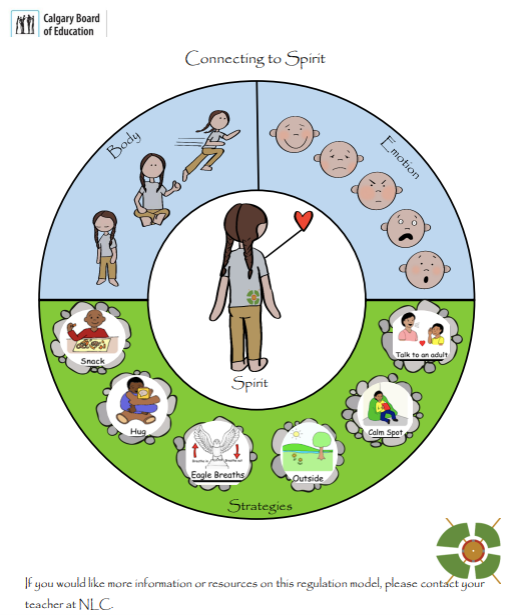
We understand that in order for students to learn, they need to feel safe and regulated. To support child development, the Connecting to Spirit Framework considers the holistic aspects of one's self, including the spiritual, emotional, physical and mental.
Connecting to Spirit Home Model
Conflict Resolution

Tips for Supporting Young Children’s Talking, Listening, and Learning
These tips honour Indigenous ways and traditions, helping your child grow language skills through everyday life. Your Child is a Gift. Children are gifts from the Creator. Treasure and care for them.
🎲 Play
Example:
| 🤝 Respond
Example:
|
Adapted from: Tips for Caregivers to Support Young Indigenous Children’s Talking, Listening, and Learning: Public Health Agency of Canada
Bus Evacuation
This week, our students took part in a Bus Evacuation Practice alongside Dreams Transportation to help ensure everyone knows how to stay safe while traveling to and from
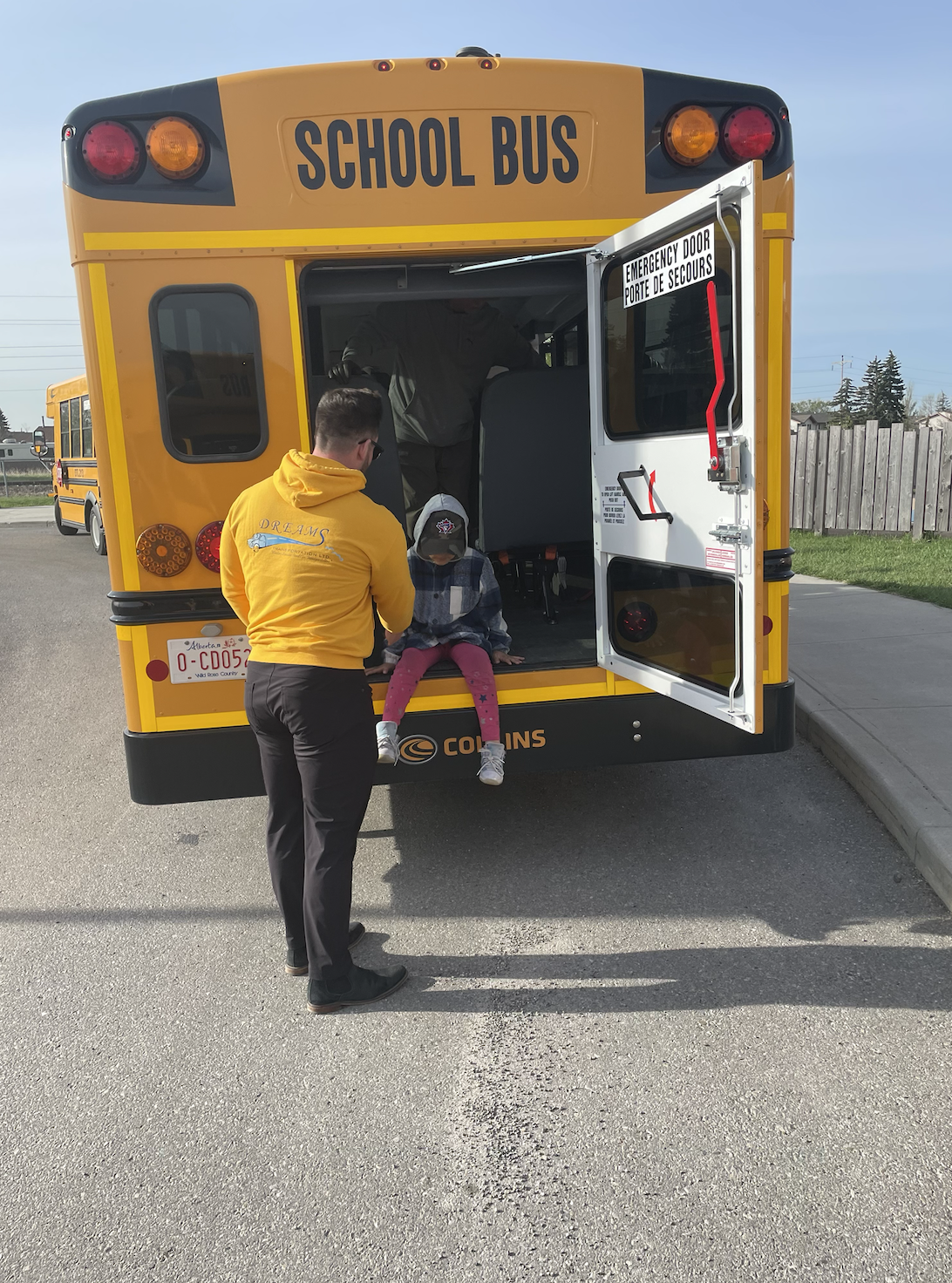
school. Students practiced how to exit the bus quickly and calmly, follow the driver’s instructions, and support one another during an emergency. These important routines help build confidence and keep safety a top priority for all.
Great job NLC for practicing being safe!
Maatoomosii ‘Pookaiks Professional Learning 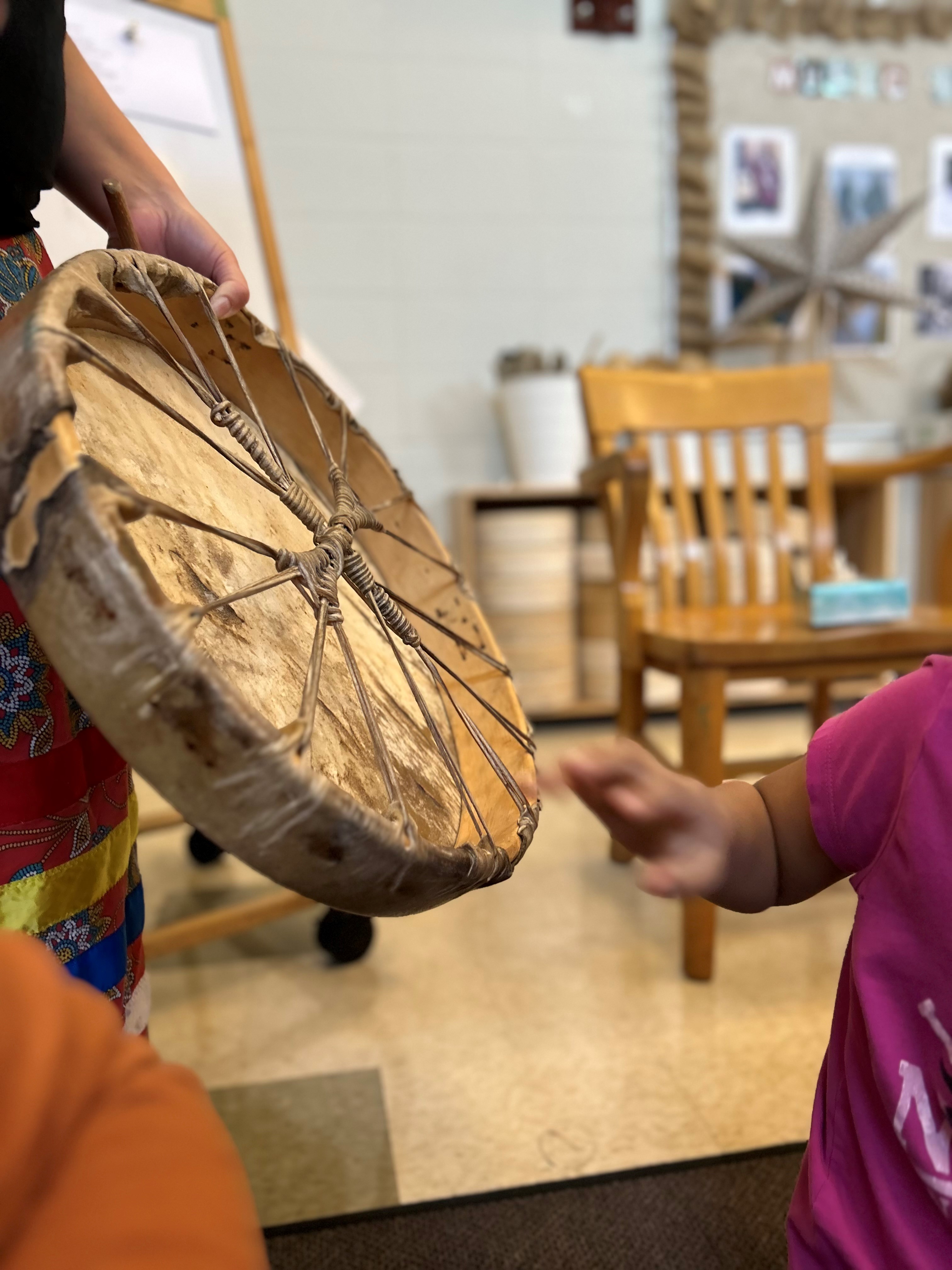
Maatoomsii’Pookaiks (Maah-doom-see Boo-gaaks), meaning "Children First" in Blackfoot, is an annual system-wide Calgary Board of Education (CBE) Indigenous Education Professional Learning Day. It is a non-instructional day for staff to build foundational knowledge of Indigenous education, history, and relations.